
Managing a home along the Front Range means dealing with a lot of outdoor debris. Between winter snowstorms, spring mud, and summer trail dirt, your entryways take a beating. If you have a beautiful hardwood hallway that leads straight to your front door, you probably spend a lot of time stressing about wet boots, standing puddles, and scratched finishes. You want a home that feels warm and cohesive, but you also need a floor that can handle the physical realities of the local climate.
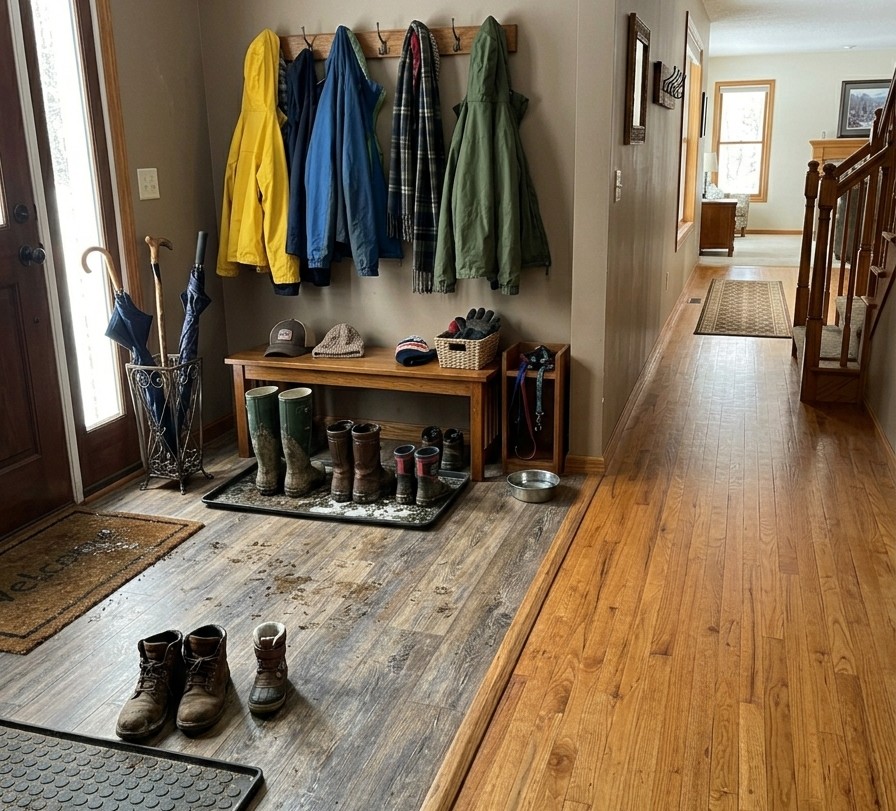
Transitioning from a highly durable, moisture-resistant material right at the door to a classic hardwood in your main living areas solves this problem completely. This mix-and-match approach gives you total peace of mind during a heavy downpour or snowstorm while keeping your home looking beautiful and intentional.
Choosing the Right Material for the Wet Zone
The first few feet inside your door are the most critical. This is where wet shoes are kicked off, muddy dogs shake dry, and snow melts onto the floor. To build a successful entry strategy, you need a material in this zone that behaves like armor against moisture and impact.
Modern laminate is an exceptional choice for this high-abuse area. Unlike older generations of flooring, premium laminate features a highly dense core and watertight locking joints that prevent standing water from seeping down to the subfloor. The top wear layer is incredibly tough, meaning it will not scratch when tiny pieces of granite or trail gravel get ground underfoot. By using a wood-look laminate right at the entrance, you get all the visual warmth of a natural plank but with the rugged performance needed to survive snowy winter boots.
Crafting a Seamless Transition to Hardwood
The biggest concern with mixing two different floors is making sure the transition looks natural rather than accidental. You do not want your home to look like a patchwork quilt of random materials. Creating a beautiful flow from your durable entry zone to your main hardwood hallway comes down to three specific design choices.
Color Coordination
Instead of trying to find a laminate that perfectly matches your hardwood—which can look like an accidental mismatch—choose a deliberate contrast. If your hallway features a rich, dark oak, look for a lighter, weathered gray or a soft natural pine laminate for the entry. Making the change obvious and distinct makes the transition feel like a purposeful architectural choice.
Flushed Heights
Different flooring materials have different physical thicknesses. Hardwood planks are typically thicker than laminate boards. If you install them side-by-side without planning ahead, you will end up with an uneven lip that catches your foot every time you walk by. Ensuring the subfloor underneath the laminate is built up to the exact height of the hardwood creates a completely flat, seamless surface across the seam.
Professional Moldings and Breaks
Connecting the two zones requires a solid, secure transition piece. A matching T-molding or a flush reducer bridge bridges the gap beautifully, hiding the necessary expansion joints while keeping the edge safe from chipping. Placing this transition line naturally under a closed door or at a clean architectural corner keeps the visual line of sight clean and attractive.
Long-Term Benefits of the Two-Zone Strategy
Dividing your floor by function saves you a massive amount of time, money, and maintenance energy over the lifespan of your home.
Targeted protection: By trapping the moisture and grit on a durable surface, you protect your delicate hardwood hallway from water staining, cupping, and finish wear.
Easier cleanup: You can mop and scrub a quality laminate floor without worrying about warping the wood fibers, making it easy to clean up after a messy week of weather.
Preserved home value: Keeping your main hardwood floors pristine and free from water damage preserves the long-term equity and visual appeal of your property.
Create a Beautiful, Weather-Ready Entrance
Protecting your home from the changing weather does not mean you have to live with cold, industrial-looking utility floors. Mixing tough, moisture-resistant laminate with timeless hardwood gives you the absolute best of both worlds: unbeatable durability right where the boots drop, and classic luxury everywhere else.
Designing a transition that flows beautifully and stays flat underfoot requires evaluating your subfloor and looking at the material profiles in person. Balancing these choices correctly keeps your home safe, functional, and stylish through every season.
Let's Design the Perfect Flooring Transition for Your Entryway
Seeing how different laminate patterns and hardwood species complement each other is much easier when you can look at the boards side-by-side in person. Our team can help you map out the exact transition lines for your layout, check your floor heights to ensure a perfectly flat seam, and help you select colors that look completely intentional. We handle all the installation details from subfloor prep to custom moldings so your floors perform flawlessly through mud, snow, and everyday life.
Visit our showroom to see our wide selection of flooring options and talk face-to-face with our team about your project. Contact us today to get an estimate, and we will help you bring your vision to life.


